Section 9 of 14

Gallery curation

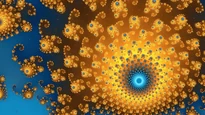
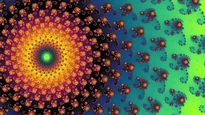
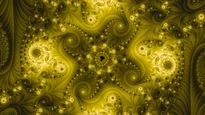
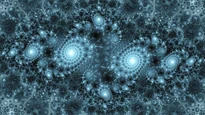
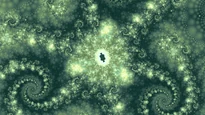
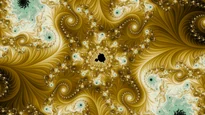
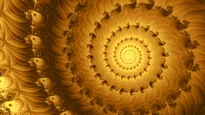
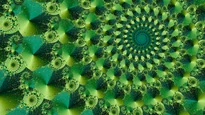
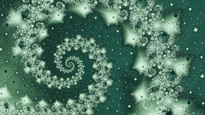
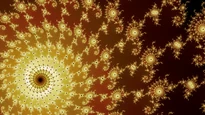
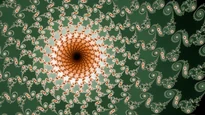
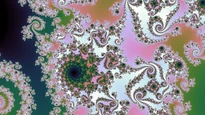
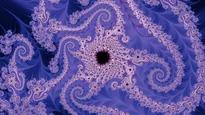
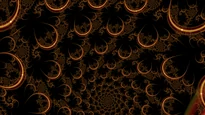
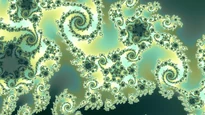
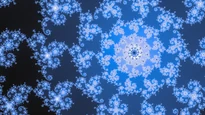
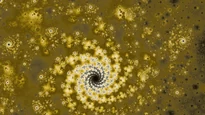
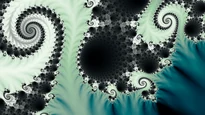
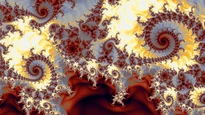
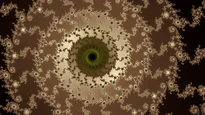
Finding good wallpapers ends with a pool of candidates: the best few judged pictures at each place and mode, accumulated across every mine. These are good wallpapers, but a gallery made by simply taking the top scores would be flat. A score rates each picture on its own and knows nothing about the others, so similar pictures score alike and the top of the ranking comes out in clumps. Here are the 24 pictures the gallery judge scores highest:


A wallpaper drawn in smooth, in the Phoenix family.

Phoenix

A wallpaper drawn in stripe average, in the Julia family.

Julia

A wallpaper drawn in smooth, in the Phoenix family.

Phoenix

A wallpaper drawn in trap spread angle over smooth, in the Phoenix family.

Phoenix

A wallpaper drawn in smooth, in the Phoenix family.

Phoenix

A wallpaper drawn in triangle-inequality average, in the Mandelbrot family.

Mandelbrot

A wallpaper drawn in smooth, in the Phoenix family.

Phoenix

A wallpaper drawn in trap spread angle over smooth, in the Julia family.

Julia

A wallpaper drawn in smooth, in the Phoenix family.

Phoenix

A wallpaper drawn in closest trap angle over smooth, in the Julia family.

Julia

A wallpaper drawn in trap spread angle over smooth, in the Phoenix family.

Phoenix

A wallpaper drawn in stripe average, in the Mandelbrot family.

Mandelbrot

A wallpaper drawn in smooth, in the Phoenix family.

Phoenix

A wallpaper drawn in stripe average, in the Julia family.

Julia

A wallpaper drawn in trap spread angle over smooth, in the Julia family.

Julia

A wallpaper drawn in triangle-inequality average, in the Mandelbrot family.

Mandelbrot

A wallpaper drawn in trap spread angle over smooth, in the Multibrot d = 3 family.

Multibrot d = 3

A wallpaper drawn in trap spread angle over smooth, in the Phoenix family.

Phoenix

A wallpaper drawn in closest trap angle over smooth, in the Phoenix family.

Phoenix

A wallpaper drawn in stripe average, in the Mandelbrot family.

Mandelbrot

A wallpaper drawn in stripe average, in the Julia family.

Julia

A wallpaper drawn in closest trap angle over smooth, in the Julia family.

Julia

A wallpaper drawn in stripe average, in the Mandelbrot family.

Mandelbrot

A wallpaper drawn in trap spread angle over smooth, in the Multibrot d = 3 family.

Multibrot d = 3

The 24 pictures the gallery judge scores highest, in order, with no curation rule applied. All 24 score within 0.02 of one another. One palette colors a quarter of them, they come from only 20 places, and six pairs are near-twins. The real 1,000-picture gallery keeps just 12.

One palette colors a quarter of them. It is a favorite of mine, and the judges learned my taste. Several places appear twice, and six pairs are near-twins. The judge also cannot really tell these pictures apart: all 24 score within 0.02 of one another. Past a certain point, the score stops choosing the gallery, and the diversity rules do.

So instead of taking the top, we write down what a gallery should look like as constraints, and solve for the best-scoring gallery of a given size that satisfies them. The same machinery makes themed galleries: ask for a gallery where every wallpaper is dominantly green, and the solve works inside that color. How good such a gallery can be depends on how much slack the pool has. Choosing the best 100 out of 1,000 green candidates is much better than choosing the best 100 out of 200.

Not every judged picture can take a seat. A picture is eligible only if it clears both judges' bars: the wallpaper judge must give it even odds or better of being rated exceptional, and the gallery judge must score it above the gallery's bar. Among the eligible pictures, the solve enforces diversity along these axes:

  • Place. One wallpaper per location. Two frames of the same spiral look unrelated as coordinates, so each location is rendered once in a neutral palette and compared as a picture using DINOv2, a vision network trained without labels. Locations that land too close together count as one place.
  • Look. No two seated pictures may be near-twins. A viewer reads two pictures as one wallpaper mostly by their colors, so two near-white pictures with different shapes still collide. The test compares the distribution of colors in each picture, weighting hue more heavily than lightness.
  • Color. Each of the forty-eight colored cells from Color palettes gets a ceiling of roughly three times its even share of the gallery, and a small floor of about one seat in fifty. No color takes over, and every color the pool can supply has some presence.
  • Palette. Near-duplicate palettes are grouped, and a group may take only about one seat in forty. Two maps that differ only in a shade make two wallpapers a viewer reads as one.
  • Rendering mode. Every mode has a floor and a ceiling of seats, so the modes that are harder to score well do not fall out of the collection, and the modes that are easy to score do not dominate everything.
  • Spirals. Spirals are capped at a tenth of the gallery. Without the cap, they would take far more of it.
  • Family and plane. We want to show a diverse set of results across fractal families. It turned out the solve already had a good distribution here, so I didn't end up adding explicit constraints.
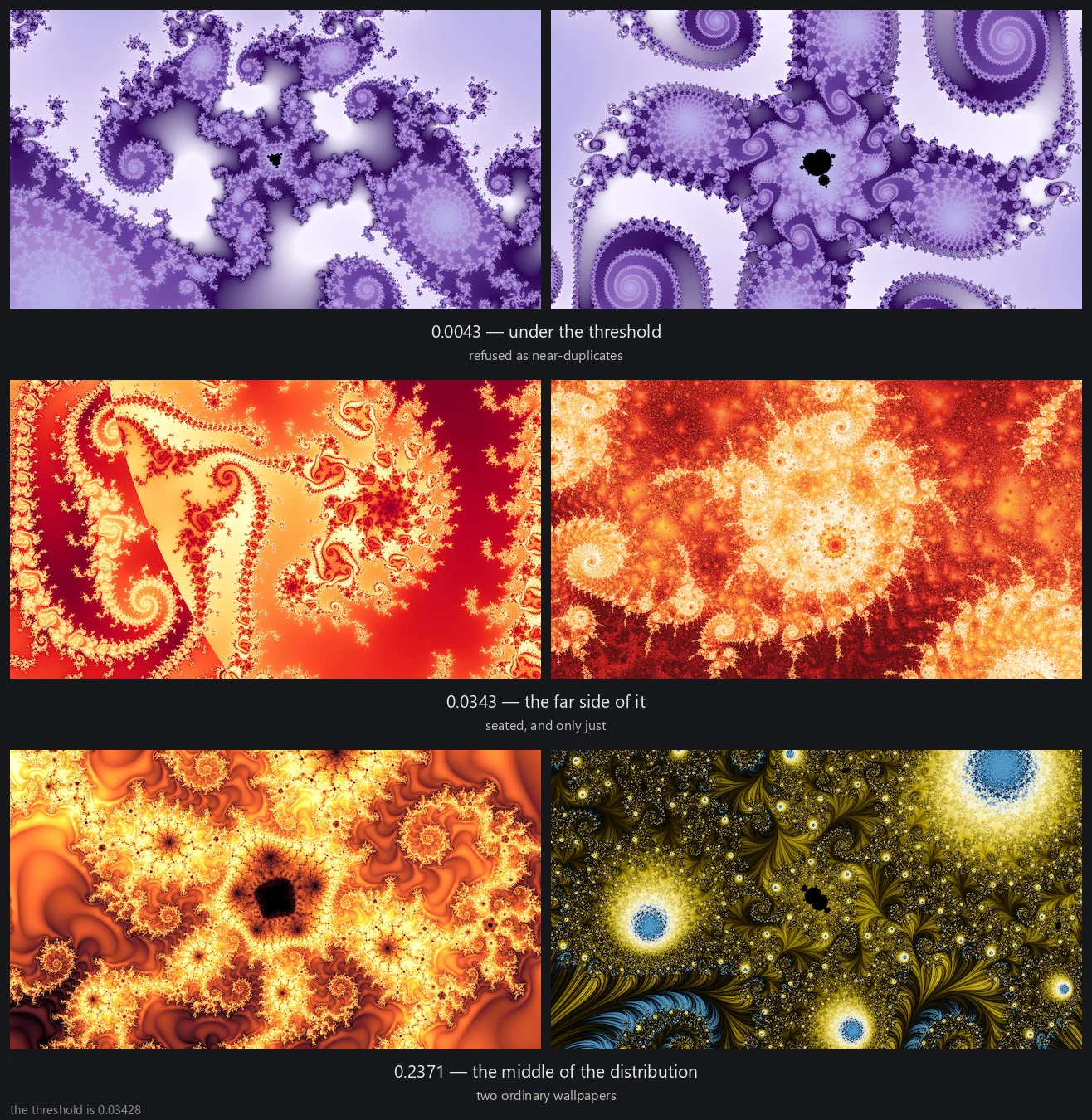
Three pairs of wallpapers, one pair to a row, each pair labeled with the distance between them: the first refused as near-duplicates, the second seated with the smallest distance in the gallery, and the third two ordinary wallpapers.
Three pairs at increasing distance under the twin measure. The first is two pictures deemed far too close; only one is allowed into the gallery. The second is the closest pair the finished gallery holds, so it's deemed just different enough to be allowed. The third is what two ordinary wallpapers measure.

What the solve optimizes

Among the galleries that satisfy every rule except the mode floors, the solve prefers, in strict order: filling every seat, meeting the mode floors, making the worst picture as good as possible, and only then making the whole gallery as good as possible. I put the worst picture ahead of the whole gallery because people look at a gallery one wallpaper at a time, so its weakest picture says more about it than its average. Optimizing the average would happily trade one mediocre picture for a wonderful one and a bad one. If the pool can't fill a seat under the rules, I leave it empty rather than padding the gallery.

The algorithm itself is simple. It first seats greedily: whatever the gallery is obliged to hold is seated first, scarcest first, and the rest is filled by walking the eligible pictures in the gallery judge's order and seating each one the rules allow. It then improves the set by exchange, swapping a seated picture for an unseated one whenever that strictly improves the goals above, and following short chains of exchanges when a seat cannot be filled any other way. The code is in solve.py and augment.py.

A wallpaper drawn in stripe average, in the Multibrot d = 4 family.

Multibrot d = 4

A wallpaper drawn in stripe average, in the Julia family.

Julia

A wallpaper drawn in smooth, in the Julia d = 5 family.

Julia d = 5

A wallpaper drawn in cross trap over smooth, in the Multibrot d = 4 family.

Multibrot d = 4

A wallpaper drawn in smooth, in the Mandelbrot family.

Mandelbrot

A wallpaper drawn in smooth, in the Julia d = 5 family.

Julia d = 5

A wallpaper drawn in smooth, in the Mandelbrot family.

Mandelbrot

A wallpaper drawn in orbit itinerary, in the Julia d = 4 family.

Julia d = 4

A wallpaper drawn in cross trap over smooth, in the Multibrot d = 4 family.

Multibrot d = 4

A wallpaper drawn in line trap, in the Multibrot d = 4 family.

Multibrot d = 4

A wallpaper drawn in orbit itinerary, in the Julia d = 5 family.

Julia d = 5

A wallpaper drawn in stripe average, in the Multibrot d = 3 family.

Multibrot d = 3

A wallpaper drawn in stripe average, in the Julia d = 3 family.

Julia d = 3

A wallpaper drawn in smooth, in the Julia d = 5 family.

Julia d = 5

A wallpaper drawn in closest trap angle over smooth, in the Multibrot d = 3 family.

Multibrot d = 3

A wallpaper drawn in smooth, in the Julia family.

Julia

A wallpaper drawn in orbit itinerary, in the Julia d = 4 family.

Julia d = 4

A wallpaper drawn in trap spread angle over smooth, in the Phoenix family.

Phoenix

A wallpaper drawn in curvature, in the Julia family.

Julia

A wallpaper drawn in triangle-inequality average, in the Julia d = 3 family.

Julia d = 3

A wallpaper drawn in stripe over smooth, in the Multibrot d = 5 family.

Multibrot d = 5

A wallpaper drawn in stripe over smooth, in the Julia family.

Julia

A wallpaper drawn in smooth, in the Julia d = 4 family.

Julia d = 4

A wallpaper drawn in smooth, in the Mandelbrot family.

Mandelbrot

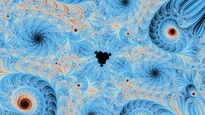
Twenty-four of the seats one curation pass filled. With every rule applied, the gallery samples the range of the pool far more evenly than the judge's own top picks.

What the three parts add up to is the subject of Full pipeline.